
Truro Township City Directory Collections
Truro Township never printed its own municipal directory run. The useful shelf is the Columbus and Franklin County material at Columbus Metropolitan Library. Telephone, reverse, map, and local-history collections also matter. They catch the area under changing place names. A directory entry is evidence that a publisher placed a person or household at a printed address around publication time. It is not a deed, a complete household list, or proof of an exact move date.
| Collection | Years | Where Held | Access |
|---|---|---|---|
| Columbus city directories | CML shelf back to 1841 | CML Local History & Genealogy, Main Library | Self-service in person; selected volumes online |
| Digitized city and business directories | Verified noncontinuous 1843–1911 core | CML City Directory Collection | Free online; check the individual volume |
| Reverse and street-address material | Street access from 1911; Simplex 1917–18 and 1929–30 | CML digital collection and Main Library shelf | Selected scans and shelf fallback |
| Telephone directories | Selected runs from 1900; county runs include 1914, 1932, 1935, and 1936 | CML City Directory Collection | Digitized selected volumes |
| Reynoldsburg–Truro Historical Society (RTHS) maps, binders, and yearbooks | Local historical material, not a single directory run | Reynoldsburg–Truro Historical Society | Third Saturday or appointment |
Digitization is reaching directories from the 1840s. The online run is not complete. Gaps are common. When a result skips a year, the physical CML volumes are the first fallback. Search Columbus, Franklin County, Reynoldsburg, Blacklick, and rural labels alongside “Truro,” and inspect the page image before trusting OCR, since optical character recognition can garble older type.
Truro Township City Directory Shelf
The heart of this work is the Columbus Metropolitan Library Local History & Genealogy service. It sits on the Main Library’s third floor. Self-service Franklin County city directories line the shelves beside maps, probate material, microfilm, cemetery records, and published genealogies. No appointment is needed to browse. Visitors can also reserve a one-hour staff consultation or use online one-to-one help. That mix matters when a scan is missing or a printed abbreviation needs a second look.
The library’s house-history guidance traces its Columbus city-directory holdings back to 1841. Search a surname in the alphabetical volumes first. For a location, move to the reverse material only for years where it exists. The core distinction never changes. A directory reports an occupant or business listing. The Recorder and Auditor carry the title and parcel trail.
A search for “Truro” lists 31 digitized directory volumes. They include city directories from 1862–88. The 1902 Central Ohio Business Directory, 1905–08 volumes, 1910–11 material, the 1917–18 Simplex Guide, and 1944–45 telephone directories round out the set. The list identifies volumes, not people. Open the scan, read the page, and save the volume year before treating OCR as a historical lead.
CML announced a milestone in December 2025. Local History & Genealogy had reached two million digitized My History items. That growing digital layer still cannot replace the shelf or a staff consultation when the needed volume, page, or image is absent online.
Truro Township City Directories Online
The CML City Directory Collection offers free scans of city directories and early Franklin County telephone directories. City and business volumes span 1843–44 through 1910–11. The run includes 1845–46, 1848, 1850–51, 1852, 1855, 1856–57, 1858–59, 1860–62, 1862, 1864, 1866–68, 1869–70, 1870–71, 1871–72, 1873–80, 1881–91, 1902, 1905–06, 1907–08, and 1910–11. Named publishers in the metadata include E. Glover, J. R. Armstrong, and R. L. Polk & Co.
The digitized directory collection anchors this Truro Township city directory view. Every lookup still ends at the page image itself.
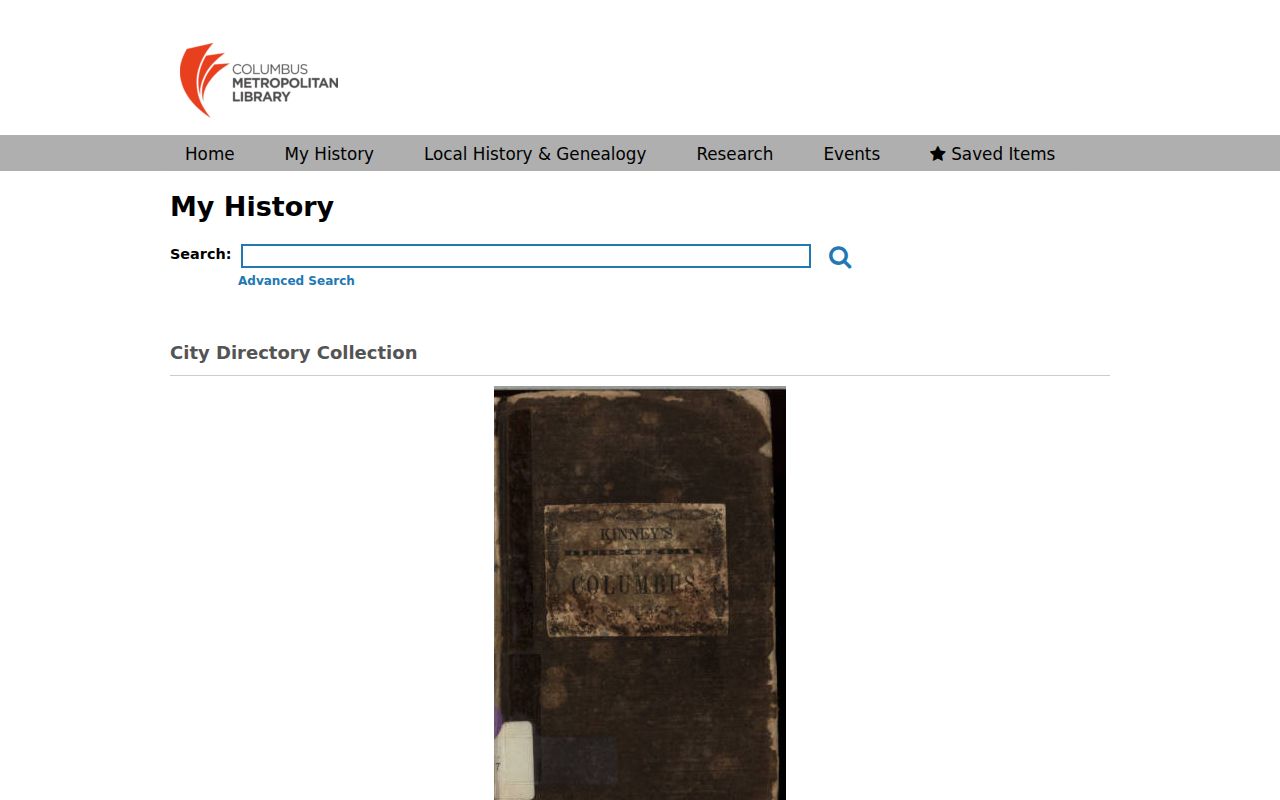
Find a volume with the collection search. Then trust the page image, not the full-text hit. A full-text hit can be imperfect. The 1852 volume credits E. Glover and describes residents, householders, and people in business. The 1889–90 volume credits R. L. Polk & Co. and adds firms, schools, churches, banks, and societies. Those descriptions show a book’s scope, but not every Truro-area household appears in every year.
Reading a Truro Township City Directory
A directory entry has a compact grammar. A 1942–43 Red Book scan shows the pattern. Entries give surname and given name or initials, sometimes a spouse in parentheses, an abbreviated occupation, and then a street address or locality. The printed abbreviation key is part of the evidence. Read it before expanding any shorthand term, and never rely on an OCR expansion the page image does not support.
| Name | Surname and given name or initials identify the indexed person. |
|---|---|
| Spouse notation | A name in parentheses may be carried and can help distinguish similar names. |
| Occupation line | An abbreviation may describe work or a workplace, subject to the volume’s key. |
| Address or locality | A house number and street, or a rural/locality reference, places the printed entry. |
| Publication context | The volume year establishes the snapshot, not a precise start or end date. |
- Criss-cross directory
- A street-order section that can organize listings by address instead of surname.
- Householder index
- An index focused on the named household contact, not a complete roster of everyone in a home.
- Abbreviation key
- The volume’s legend for shortened words; photograph or note it before interpreting an entry.
Truro Township Street Directory Access
CML dates street-address and reverse access to 1911. That is the turning point for address-first searches. Later routes run from a street to a published occupant. They include the 1917–18 Dreher’s Simplex Guide, the 1929–30 Simplex Street and House Number Guide, and the 1926 Columbus phone book. The 1926 phone book is arranged by street name. That helps when a surname index is weak. Read a reverse listing as a lead only. Compare the preceding and following directory years before trusting it. Historic township territory can carry an older road name or a different municipal label. CML’s house-history materials, plats, the legal description, and an old map reconcile an address more safely than treating a gap as a move.
Truro Township Directory News Trails
A Truro Township residents directory goes quiet once a name drops out of the listings. News indexes and obituary tools can explain the gap. The CML obituary-request service sends a date-specific ask to library staff. The staff handle the search on their end. Its companion is the Columbus News and Obituary Index. It reaches selected Franklin-area articles from 1960–97. It also covers obituaries from 1931–97. Earlier browse groups appear in the collection too. A death notice can point to a date or a family link. Treat it as a lead, though. Weigh it against the cited paper and other records. Trust no conclusion drawn from the residents directory alone.
The obituary-request page shows how a request to library staff is submitted.
The Columbus News and Obituary Index adds a searchable layer of local history for Truro Township lookup work. Staff help is a solid fallback. Librarians can often pull a precise issue or a full obituary that never appears online.
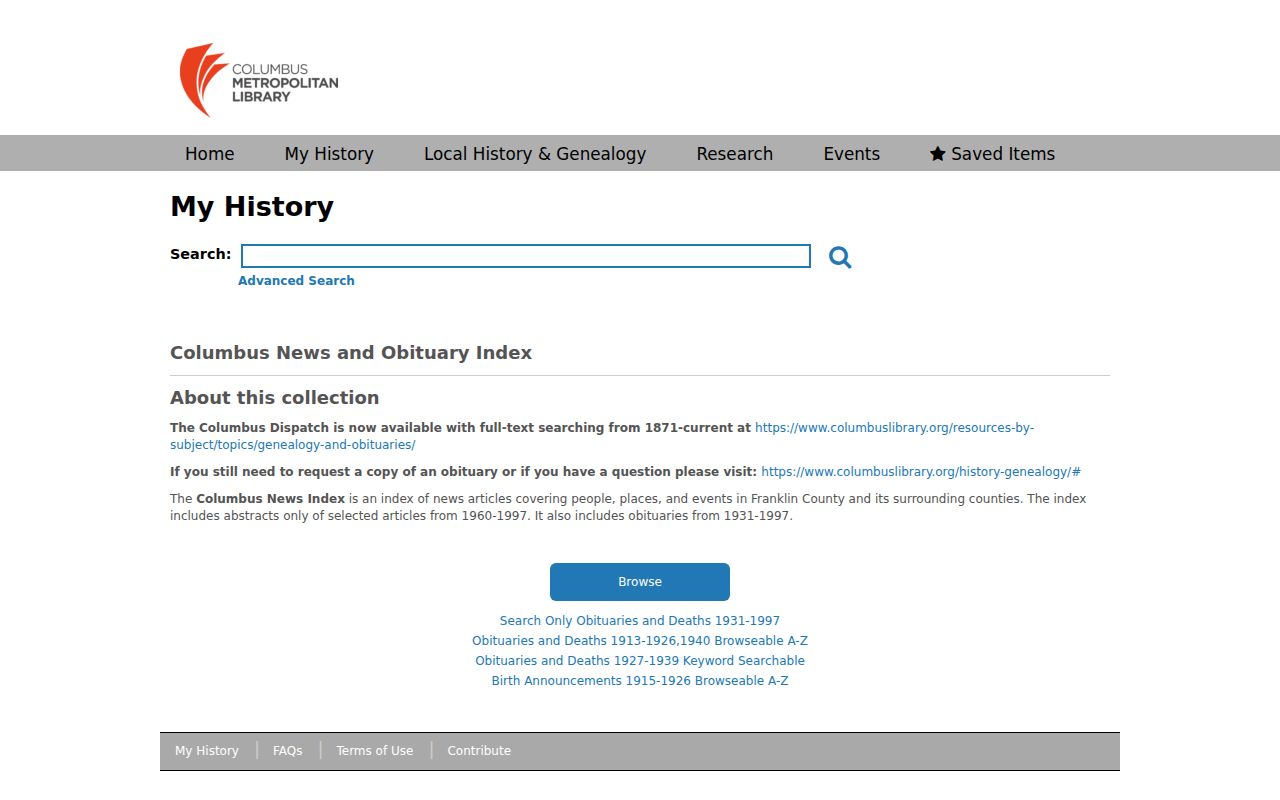
Date coverage matters here. It tells you whether to search the index itself, request a copy of an obituary, or move on to a different collection. The Central Ohio News and Subject Index rounds things out with Ohio State Journal indexes from 1913–40 plus Seifert’s Columbus-newspaper index reaching back to 1811–1919.
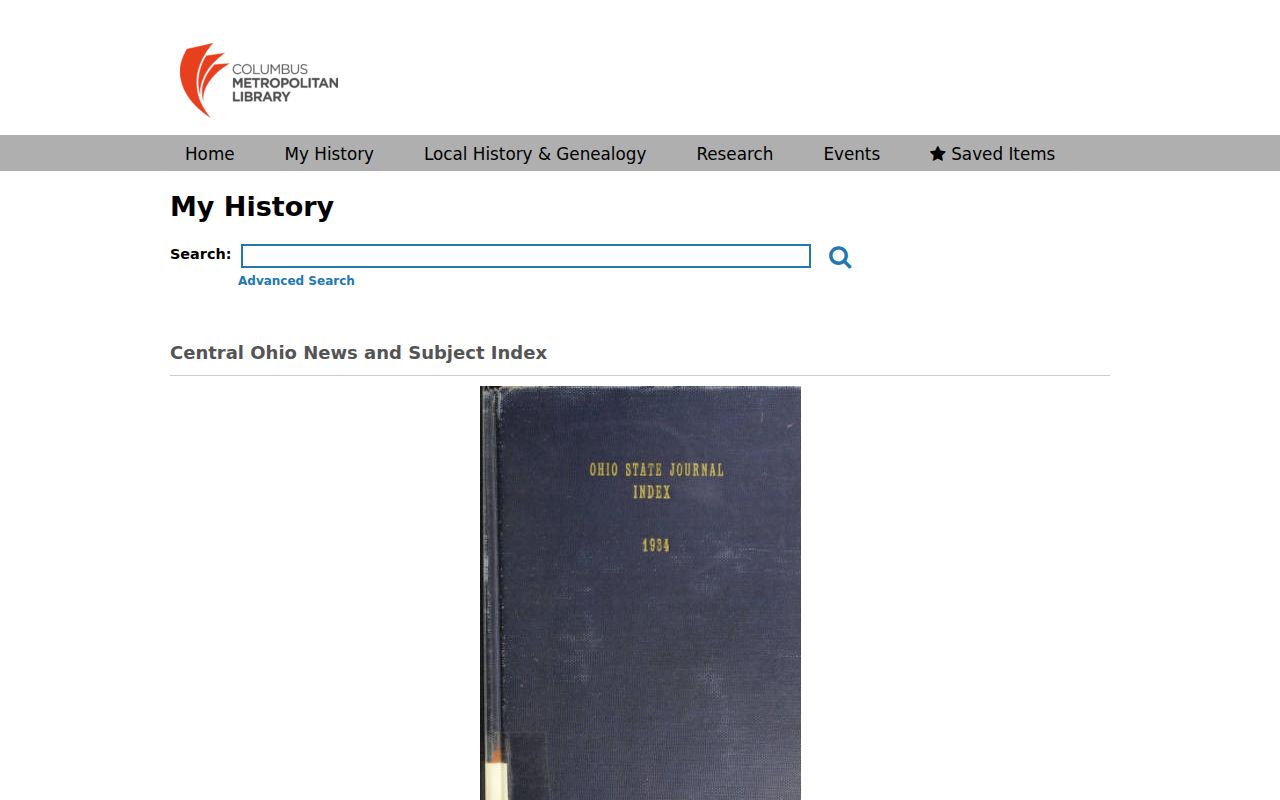
Treat these indexes as leads. They point to an issue or subject, never replacing a look at the article itself.
Truro Township Directory Family History
Trace one household across a run of volumes. A single city directory is just a snapshot. The Truro Township records tell more when read in sequence. Begin with the volume nearest a deed transfer or a census appearance you already trust. Copy every entry exactly as printed, spellings, spouse notes, abbreviations, and all. Then compare neighboring volumes. Look for a new address, a widow notation, a name variant, or a quiet disappearance. A gap online may just mean nobody digitized that volume yet.
- Find the closest available name entry and save the publication year with the page image.
- Check earlier and later volumes for the same spelling, spouse notation, locality, and address.
- For 1911 and later, test a reverse or street listing to compare the address from the other direction.
- Pair a decade-level clue with the released federal census. The 1950 census is the latest released schedule in this research.
- Use a deed, obituary, cemetery ledger, or Probate file only for the separate question that source can answer.
A name that drops out of the Truro Township city directory can point to several things. A move, a death, an unscanned year, or a changed listing form will all do it. Before treating a historical entry as proof, check it against independent modern records; the one-person method sits on the Truro Township resident lookup page.
Truro Township Directory Archives
Beyond the city-directory scans, deeper context lives in local repositories. The Reynoldsburg–Truro Historical Society holds more than 300 genealogy binders. Its collection also includes scrapbooks, photographs, plats, graveyard files, township and county maps, court records, letters, books, and Reynoldsburg High School yearbooks. Its museum and learning center sits at 1485 Jackson St. Visits work on the third Saturday, 10 a.m. to 2 p.m. Tours and appointments are another option. Treat it as a historical archive rather than a current personal directory. The Reynoldsburg–Truro Historical Society offers this local archive view.
Maps and yearbooks earn their keep in family research. A plat can test a historical place name before it enters a timeline. A yearbook can confirm a school-community lead the same way. FCGHS points to a range of Franklin County material. That includes court abstracts, cemetery readings, censuses, plat indexes, and a Jefferson & Truro Township cemetery volume. Its regular research service is suspended for the rest of 2026 because of volunteer availability. Ohio History Connection opens its public Archives & Library only on Thursday and Friday. Hours are 10 a.m. to 3 p.m., effective July 2026, with paging from 11 a.m. to 1:30 p.m. Appointments are encouraged.